
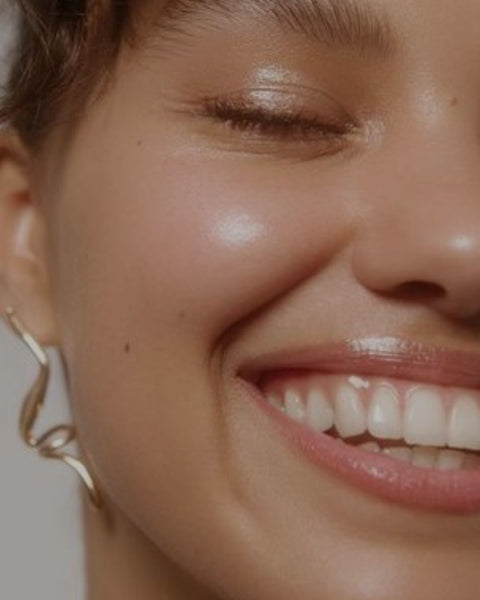
Why are my teeth yellow? The most common causes & what really helps
Yellow teeth are a common concern – and often there's more behind it than just a lack of care. The colour of our teeth is determined by many factors: diet, habits, natural predisposition and the structure of enamel and dentine. A look at the most common causes helps you understand what's really going on – and what actually helps.
How teeth get their colour
Tooth enamel is naturally a slightly yellowish-white to greyish-white – it isn't brilliant white. Beneath it lies the dentine, which is considerably more yellow and shows through more strongly when the enamel is thinner. This natural base colour is genetically determined and can't be brushed away.
As we get older the enamel becomes thinner, and the yellower dentine shows through more. At the same time, over the years, colourants from food and drinks build up on the tooth surface. This is a completely normal process.
Common causes of discolouration
Food and drinks
Coffee, tea, red wine, dark berries and sauces are the most common triggers of extrinsic discolouration. The colour pigments (chromogens) settle in cracks and uneven spots on the tooth surface. Drinking them regularly over the years leaves visible traces.
Smoking and tobacco
Nicotine and tar from cigarettes cause stubborn, brownish-yellow deposits that can become embedded deep in the enamel. These stains are harder to remove than those from food.
Enamel structure and dentine
Anyone who naturally has thinner enamel sees the yellower dentine more. That's not a question of care, but of individual anatomy.
Certain medications
Antihistamines, antihypertensives or antibiotics (especially tetracyclines in childhood) can cause discolouration – from the outside or directly within the tooth.
Fluorosis
Excessive fluoride intake in childhood can leave white spots or brownish discolouration.
What really helps – and what doesn't
Not all whitening promises live up to what they claim. A realistic overview:
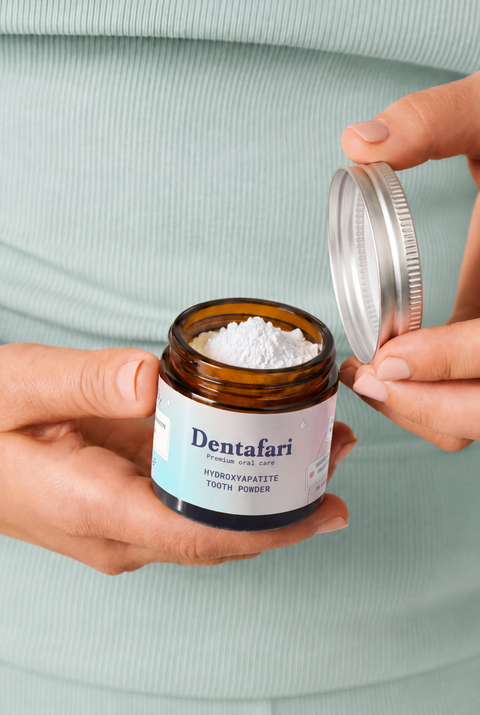
Hydroxyapatite tooth powder
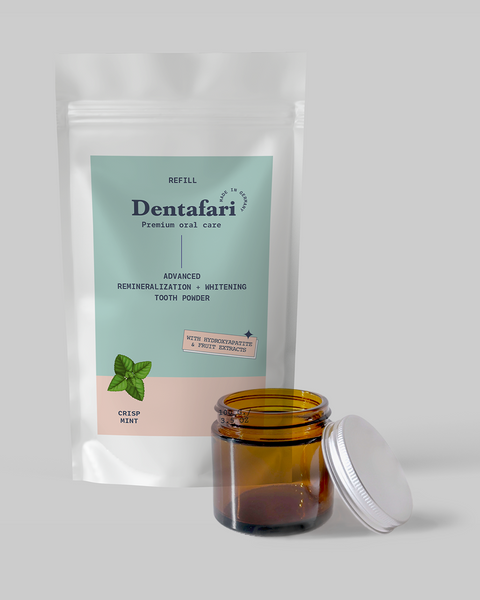
Hydroxyapatite is the same mineral that tooth enamel is made of. It smooths the tooth surface through micro-abrasion, so that colourants are less able to settle. The result: a naturally brighter appearance – without aggressive bleaching agents. At Dentafari we rely on high-quality, non-nano hydroxyapatite.
Activated charcoal
Activated charcoal is an abrasive. There is currently insufficient scientific evidence for a whitening effect from activated charcoal; with regular use, abrasive brushing can put a strain on the enamel.
Bleaching (peroxides)
Professional bleaching with hydrogen peroxide can genuinely lighten the inner tooth colour – though with possible side effects such as sensitivity. Treatments like these belong in the hands of dentists.
Baking soda
Acts as a mild abrasive, but is not a lasting solution and can strain the enamel with regular use.
What you can do every day
For lighter teeth in the long term, your daily routine is what matters – not a one-off step:
- Drink a little water after coffee to dilute colour pigments
- Brushing technique: gentle and regular – don't press harder
- Use tooth powder with hydroxyapatite rather than overly abrasive alternatives
- Regular dental check-ups – a professional clean removes deposits you can't brush away yourself
Dentafari's approach: brightening naturally, without harshness
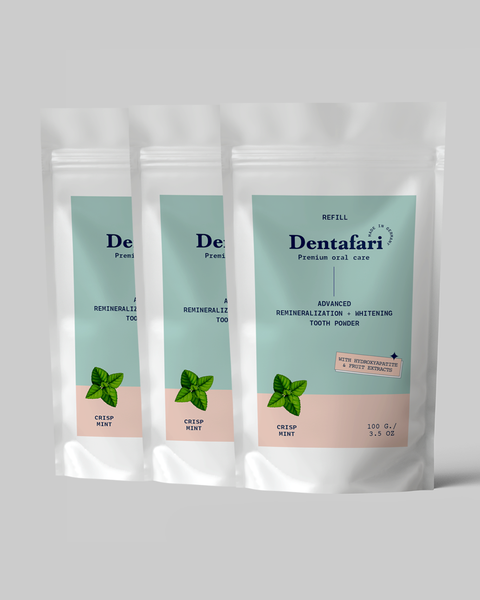
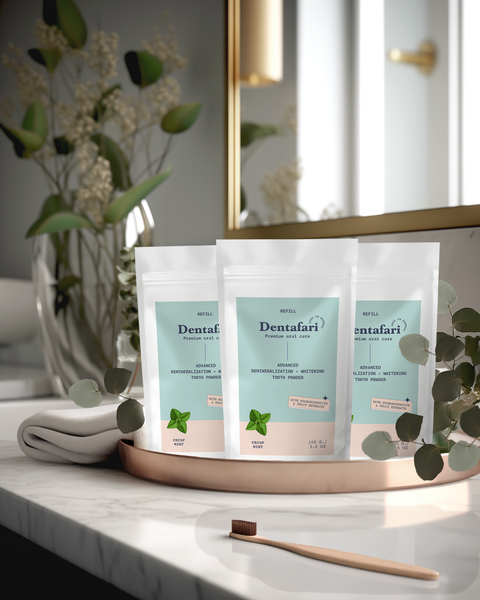
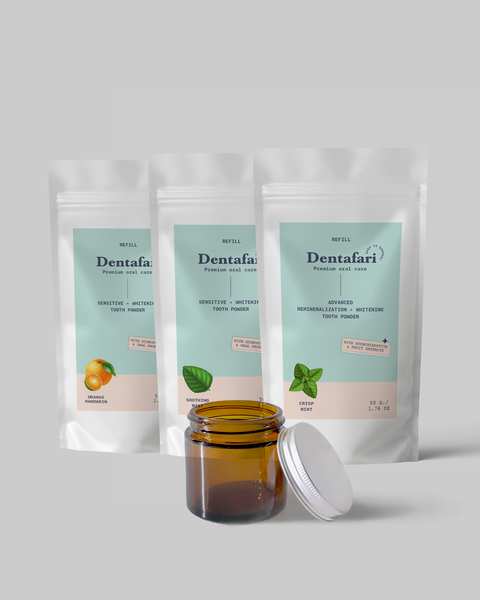
Our tooth powders rely on hydroxyapatite combined with plant-based enzymes (papain, bromelain) and xylitol. The enzymes support gentle brightening through the enzymatic breakdown of protein deposits. The result is a brighter appearance that comes from care – not from bleaching.
If the topic of tooth whitening is on your mind: our article An overview of whitening methods shows which methods really work. Or discover our tooth powders directly.
Bestsellers
Comments (0)
There are no comments for this article. Be the first one to leave a message!